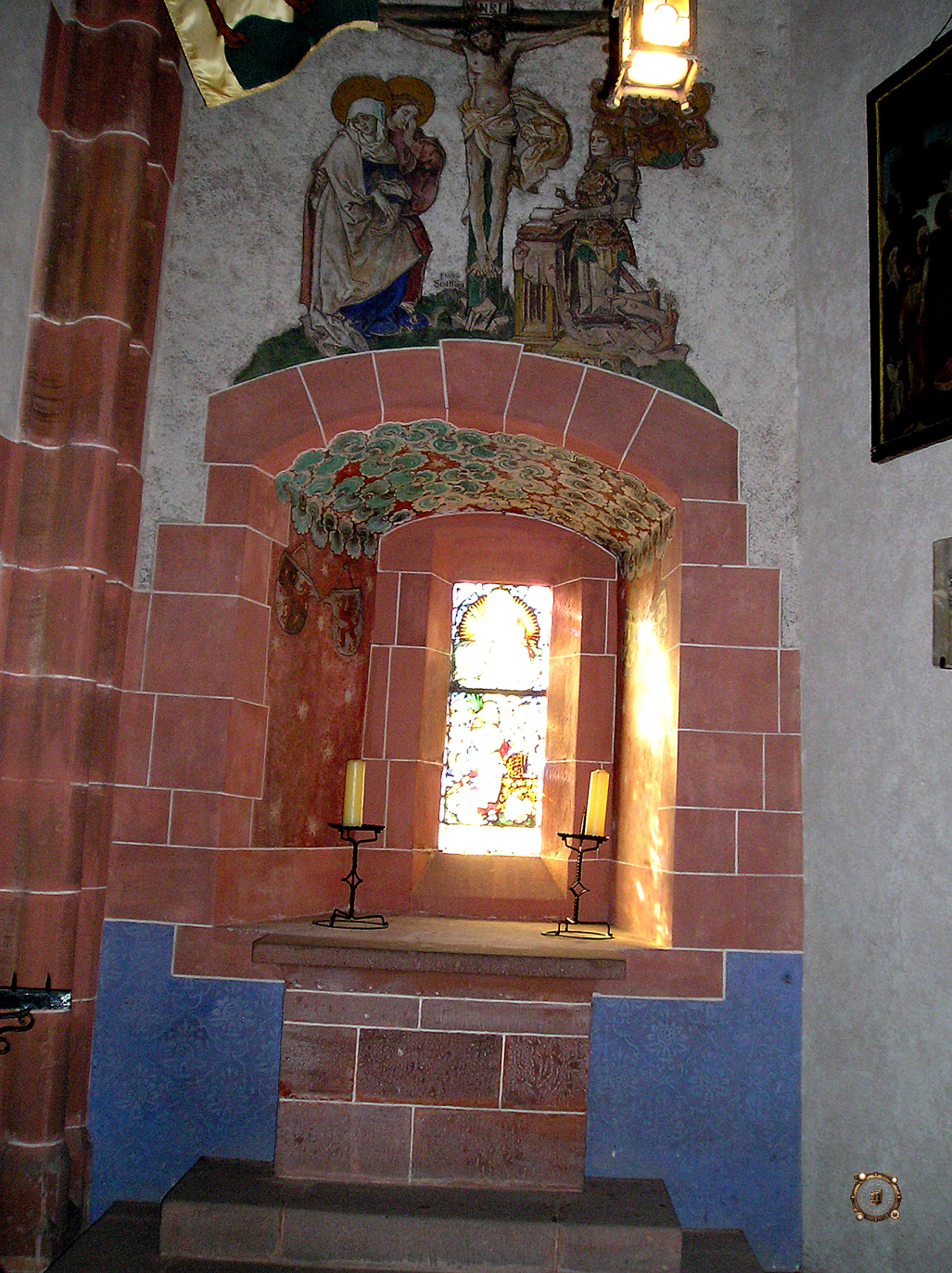
Upon entering the chapel in the south wing, the atmosphere changes immediately: footsteps become quieter, thoughts calmer, as if the place naturally inspires contemplation. Here, there is no pomp or ostentatious decor—the chapel is distinguished by an almost monastic simplicity.
Light enters only through a single stained-glass window, whose muted hues cast a soft, almost fragile glow on the whitewashed walls. This plaster, similar to that used in the other rooms of the wing, highlights the pinkish stones that make up the chapel's load-bearing elements: arches, frames, and quoins. The overall effect creates a delicate contrast, as if the architecture itself sought to magnify the essential without artifice.
Above the window, a fresco depicting the crucified Christ dominates the space. The colors, though somewhat faded by time, remain nonetheless expressive. The visitor's gaze is naturally drawn to this simple yet poignant scene, a reminder of the site's spiritual purpose and the faith that inspired the castle's inhabitants.
In this small chapel, serenity pervades everything: the profound silence, the soft light, the pinkish stone revealed by the light plaster without ever overpowering it. It is a place where time seems suspended, an intimate space that invites both contemplation and humility. A soothing respite in the very heart of the fortress.
No commentsAbsence de commentaire
This photo has not received any comments yet, create an account and be the first to leave a comment.